Superscript vs Subscript: What Is the Difference?
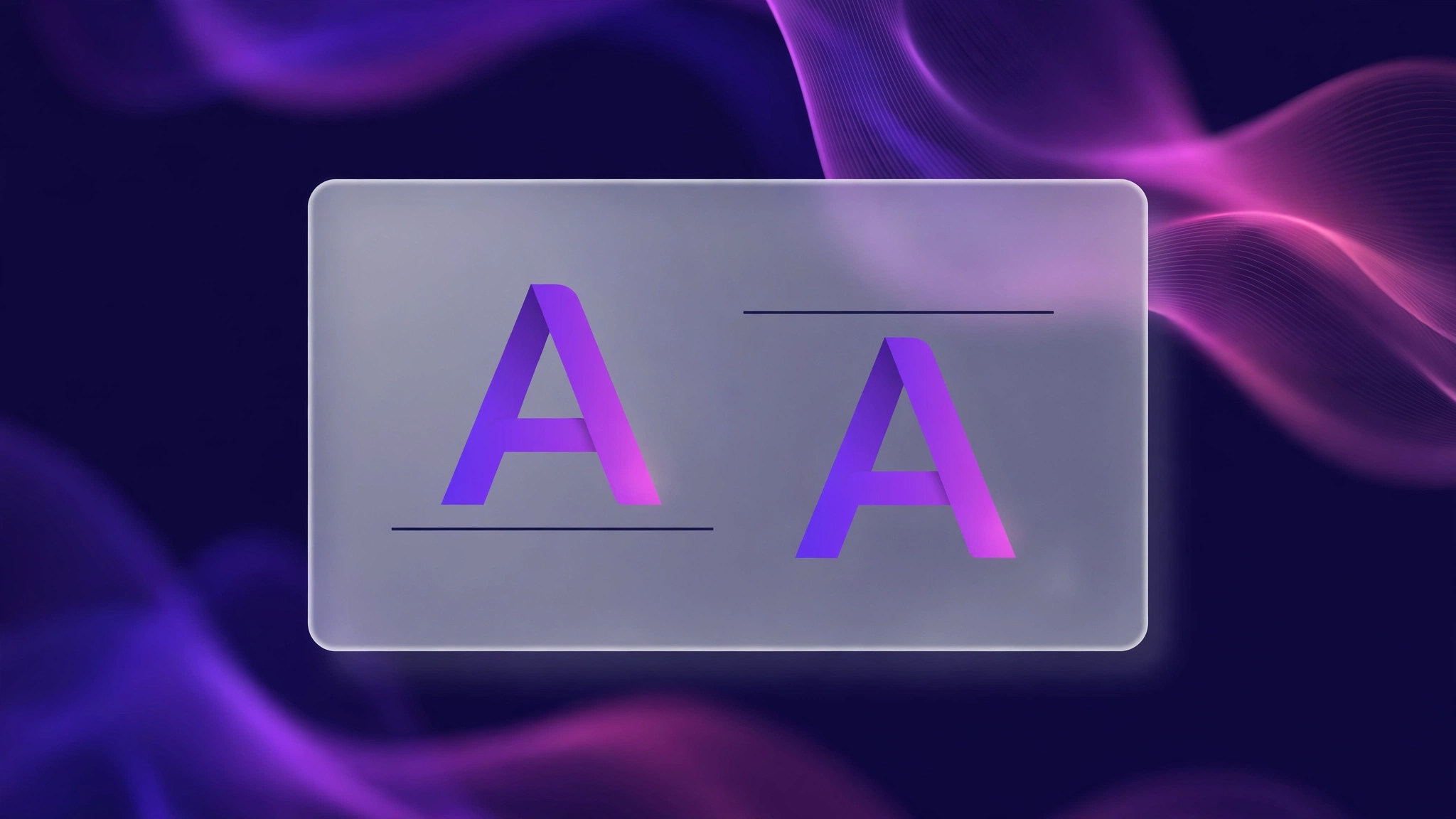
Superscript is small text raised above the line, used for exponents, ordinals, and footnotes. Subscript is small text lowered below the line, used for chemical formulas and indices. They are opposites: one goes up, one goes down.
Superscript and subscript look alike at a glance. Both are small text, both sit off the normal line, and both show up in maths, science, and ordinary writing. But they do opposite jobs, and using the wrong one changes the meaning.
This post explains the difference in plain words, with examples for each, so you can pick the right one every time. Our site started as a text repeater, and the same copy-paste idea powers the tiny text generator below.
What is superscript?
Superscript is text raised above the baseline and made smaller. The baseline is the invisible line that normal letters sit on. A superscript character floats above it, usually at about half the size of the surrounding text.
You meet superscript in four places: maths exponents, where x squared means x times x; ordinals, where the st in 1st and the nd in 2nd are often raised; footnotes, where small numbers after a sentence point to a note at the bottom of the page; and trademarks, such as the TM after a brand name.
Superscript is always about raising. If the character needs to sit above the line to make sense, it is a superscript.
What is subscript?
Subscript is text lowered below the baseline and made smaller. It hangs under the line instead of floating above it. The most famous subscript in the world is the 2 in H2O, the formula for water. Without the lowered 2, the formula is wrong.
You meet subscript in three places: chemistry, where the small number in H2O and CO2 says how many atoms of an element are in the molecule; maths, where x1, x2, and a-n say which item in a list you mean; and physics, where a small letter identifies the particle, such as v-e for an electron neutrino.
Subscript is always about lowering. If the character needs to sit below the line to make sense, it is a subscript.
Superscript vs subscript at a glance
| Superscript | Subscript | |
|---|---|---|
| Position | Above the line | Below the line |
| Size | Smaller than normal text | Smaller than normal text |
| Used for | Exponents, ordinals, footnotes, trademarks | Chemical formulas, indices, sequences |
| Examples | x squared, 1st, 2nd, TM | H2O, CO2, x1, a-n |
| Keyboard shortcut in Word | Ctrl+Shift+= | Ctrl+=, or Ctrl+Shift+Minus in newer Microsoft 365 |
| Keyboard shortcut in Google Docs | Ctrl+. | Ctrl+, |
The table makes the rule easy to remember: superscript goes up, subscript goes down. Everything else follows from that one fact.
When to use superscript
Use superscript when the small text adds information above the line. The clearest cases are exponents and powers: x squared, 10 to the power of 3, E equals mc squared. In each case the raised number changes the value, and writing it on the line would mean something else entirely.
Use superscript for ordinals in informal writing: 1st, 2nd, 3rd, 4th. In formal writing, spell the word out instead (first, second, third), because style guides prefer words to raised letters in running text. In a date or a heading, the raised ordinal is common and accepted.
Use superscript for footnote and reference markers. A small raised number after a sentence points the reader to a note, a source, or a comment at the bottom of the page. Academic writing runs on these markers, and they only work because they sit above the line, out of the way of the sentence itself.
Use superscript for trademarks. The TM after a brand name and the small R in a circle after a registered trademark are both superscript symbols. They mark ownership without interrupting the name.
Do not use superscript for chemical formulas, indices, or sequences. Those belong below the line, and putting them above it is not a style choice, it is an error.
When to use subscript
Use subscript when the small text belongs below the line. The clearest case is chemistry. In H2O, the 2 says the molecule holds two hydrogen atoms. In CO2, the 2 says it holds two oxygen atoms. Raise those numbers and the formulas stop meaning anything.
Use subscript for indices in maths. When a list has many items, the small number says which one you mean: x1 is the first, x2 is the second, a-n is the nth item. The number is not a power, so raising it would turn an index into an exponent and change the maths.
Use subscript for sequences and series, where the same letter with different small numbers means different terms. The Fibonacci sequence is written with subscripted terms for exactly this reason.
Use subscript in physics for particle symbols and similar labels, where the small letter or number identifies the particle. The letter stays on the line and the identifier hangs below it.
Do not use subscript for exponents, ordinals, footnotes, or trademarks. Those belong above the line.
The mistakes people make
The most common mistake is swapping the two. It usually happens when someone copies a formula from a chat or a web page and retypes it by hand. H2O typed with a raised 2 looks close enough on a quick read, but it is wrong, and a teacher or a chemist will spot it at once. The fix is to check the position, not the size: above the line is superscript, below the line is subscript.
The second mistake is using superscript for everything small. Ordinals and exponents are superscript, but a chemical formula is not, and neither is an index. When in doubt, ask what the small text means. If it counts atoms or picks an item from a list, it goes below. If it raises a number to a power or marks a footnote, it goes above.
The third mistake is reaching for Unicode letters when formatting is the right tool. Unicode has real superscript and subscript letters, and they are useful in bios, chats, and comments where no formatting exists. But in a Word document or a Google Doc, formatting is better: it keeps the text searchable, it reads correctly in screen readers, and it prints cleanly. A screen reader often reads Unicode styled letters one at a time, by name, instead of reading the word, so a whole paragraph in Unicode small text is painful to listen to. Use formatting in documents and Unicode letters only where formatting does not exist.
The fourth mistake is trusting that every letter has a small form. Superscript letters exist for all 26 letters, since Unicode 14.0 added superscript q as U+107A5 in 2021. Subscript covers only 20 of 26 letters: the newest additions, subscript w, y, and z, arrived in Unicode 18.0 in September 2026, and many fonts do not have them yet. The letters with no subscript form at all are b, c, d, f, g, and q.
Unicode letters vs formatting: which one are you looking at?
There are two different things that both look like small text, and telling them apart saves a lot of confusion. Formatting changes how a normal letter looks. The letter stays the same letter, and the app adds a note that says to draw it raised or lowered. Unicode small letters are different characters. A superscript 2 and a normal 2 are two different entries in the Unicode standard, and they stay different no matter where you paste them.
Formatting wins in documents. It is searchable, it works with screen readers, and it prints exactly as it looks on screen. It loses the moment you leave the app, because plain text has nowhere to store the “raise this” note. Paste formatted superscript into a plain text field and it arrives as a normal letter.
Unicode letters win everywhere else. They work in bios, comments, chats, file names, and any field that takes plain text, because they are characters, not formatting. They lose on coverage: some letters have no small form, and some fonts lack the newest ones. They also lose on accessibility, because screen readers may spell them out letter by letter.
Our free tool makes both superscript and subscript Unicode letters: https://quicktextrepeater.com/tiny-text-generator/ Type your text, pick superscript or subscript, copy the result, and paste it where formatting does not exist. The tool leaves the newest subscript letters, w, y, and z, unchanged for now, because most fonts do not have them yet, and the tool page explains why.
Superscript vs subscript vs small caps
Small caps are a third kind of small text, and they are neither superscript nor subscript. Small capital letters are short versions of capital letters that sit on the normal line. They are not raised and not lowered. They are used for headings, acronyms, and stylistic text, not for maths or chemistry.
The confusion comes from generators that offer all three styles side by side. Superscript goes up, subscript goes down, small caps stay on the line. If your text needs to sit above or below the line, it is not small caps. If it needs to look like short capitals on the line, it is not superscript or subscript.
How to type them
This post is about the difference, not the keystrokes, so the typing steps live in a separate guide. For the exact shortcuts in Word, Google Docs, Excel, and PowerPoint, plus the Unicode paste method for your phone, see our typing guide: https://quicktextrepeater.com/how-to-type-subscript-and-superscript/
The one-line version is this: in Word, Ctrl+Shift+= raises text and Ctrl+= lowers it (or Ctrl+Shift+Minus in newer Microsoft 365). In Google Docs, Ctrl+. raises text and Ctrl+, lowers it. On a phone, there is no built-in key, so paste Unicode letters from a generator.
FAQ
What is the difference between superscript and subscript?
Superscript is small text raised above the line, used for exponents, ordinals, and footnotes. Subscript is small text lowered below the line, used for chemical formulas and indices. One goes up, the other goes down.
Is H2O superscript or subscript?
Subscript. The 2 in H2O sits below the line and says the molecule holds two hydrogen atoms. A raised 2 would be wrong.
Is x squared superscript or subscript?
Superscript. The 2 in x squared sits above the line and means x times x. A lowered 2 would mean something else entirely.
When do you use subscript in maths?
For indices and sequences, such as x1, x2, and a-n, where the small number says which item in a list you mean. Exponents are superscript, not subscript.
Can a letter be both superscript and subscript?
No. A character is one or the other. Unicode has separate superscript and subscript letters, and formatting raises or lowers a letter, never both at once.
Internal links
- Text Repeater (homepage): https://quicktextrepeater.com/
- Tiny Text Generator (copy superscript and subscript letters): https://quicktextrepeater.com/tiny-text-generator/
- How to Type Subscript and Superscript (the keystrokes for every app): https://quicktextrepeater.com/how-to-type-subscript-and-superscript/
- How to Make Small Text in Discord (small text in messages and names): https://quicktextrepeater.com/how-to-make-small-text-in-discord/
- Copy Paste Italic Letters (more styled letters): https://quicktextrepeater.com/copy-paste-italic-letters/
References
- Unicode Consortium, Unicode 14.0 (superscript q, U+107A5, 2021): https://www.unicode.org/versions/Unicode14.0.0/
- Unicode Consortium, Unicode 18.0 (subscript w, y, z, U+209D, U+209E, U+209F, September 2026): https://www.unicode.org/versions/Unicode18.0.0/
- Microsoft Support, Format text as superscript or subscript in Word (superscript Ctrl+Shift+Plus, subscript Ctrl+Shift+Minus in current versions): https://support.microsoft.com/en-us/word/format-text-as-superscript-or-subscript-in-word
- Google Docs Editors Help, Keyboard shortcuts for Google Docs (superscript Ctrl+., subscript Ctrl+,): https://support.google.com/docs/answer/179738?hl=en
- Android Police, Google Docs: Apply subscripts and superscripts to your document (uses: exponents, footnotes, chemical formulas, indices): https://www.androidpolice.com/google-docs-subscript-superscript-workspace/